


How Illegal Dealers Pose as Private Sellers Curbstoning is one of the most aggressive scams in the used-car market, and most buyers don’t even realize they’re dealing with it until after the money is gone. A curbstoner is an unlicensed dealer posing as a private seller, often moving multiple vehicles at once while avoiding taxes, disclosures, inspections, and legal responsibility. The listings look normal. The stories sound believable. But behind the scenes, curbstoning fuels stolen, flood, salvage, and title-washed vehicle pipelines nationwide. If you’re buying private party, learning how curbstoners operate is essential. How Curbstoners Actually Operate (Step-by-Step) Step 1:...
Read More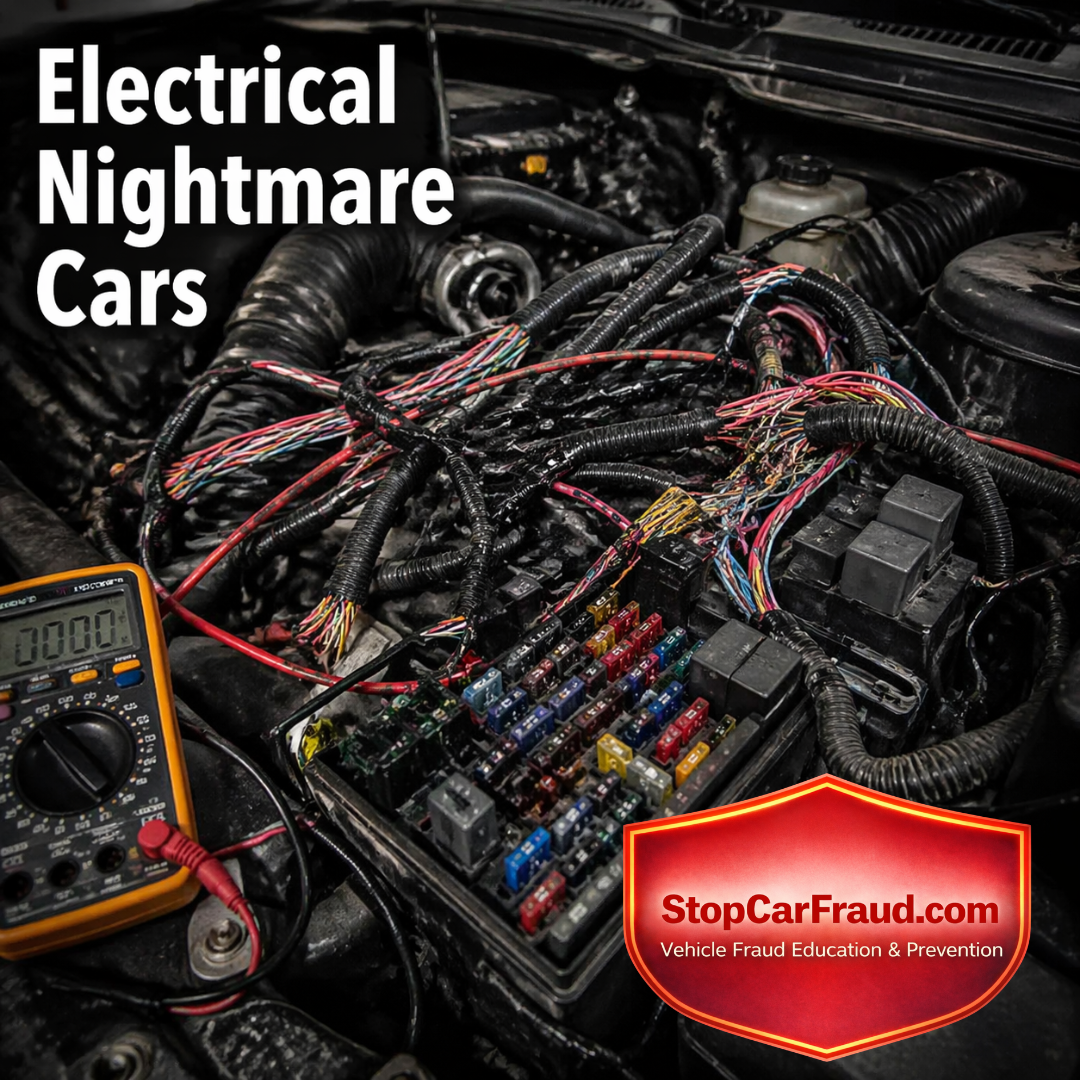
When Everything “Works”... Until It Doesn’t At first glance, the car seems fine. The lights turn on, the dash looks normal, maybe even the test drive goes smoothly. But electrical nightmare cars don’t reveal themselves right away—they wait. These are vehicles where wiring has been patched, altered, or outright butchered, often after accidents, floods, or sloppy repairs. What you’re really buying isn’t a car, it’s a rolling question mark. The Problem You Can’t See Unlike engine issues or body damage, electrical problems are buried deep inside the vehicle. Behind panels. Under carpets. Inside harnesses you’ll never see unless the car...
Read More
Screenshots, Fake Banks & “Pending Transfers” If you’re selling a vehicle right now, understand this clearly: the modern scammer doesn’t show up empty-handed, they show up with “proof.” FAKE PROOF. And it’s convincing enough that sellers across the country are handing over keys, titles, and vehicles, only to find out the money never existed. This is the fake buyer proof scam, and it’s designed to hit fast, look legitimate, and disappear before you can react. The Setup: A Perfect Buyer Appears It starts easy. You list your car. Within hours—or even minutes—you get a serious buyer. No games. No lowballing....
Read More
How Buyers and Sellers Lose Thousands in Minutes Car fraud isn’t always loud, messy, or obvious. Some of the worst scams are clean, polite, and professional-looking, and by the time victims realize what happened, the money is already gone. Fake lienholder, wire fraud, and deposit scams are exploding across private-party car sales, and they’re hitting both buyers and sellers hard. If you don’t understand exactly how these scams work, you’re vulnerable. How the Scam Actually Works (Step-by-Step) Most fake lienholder scams follow a predictable script. First, the fraudster lists a vehicle slightly below market value to trigger urgency and emotional...
Read More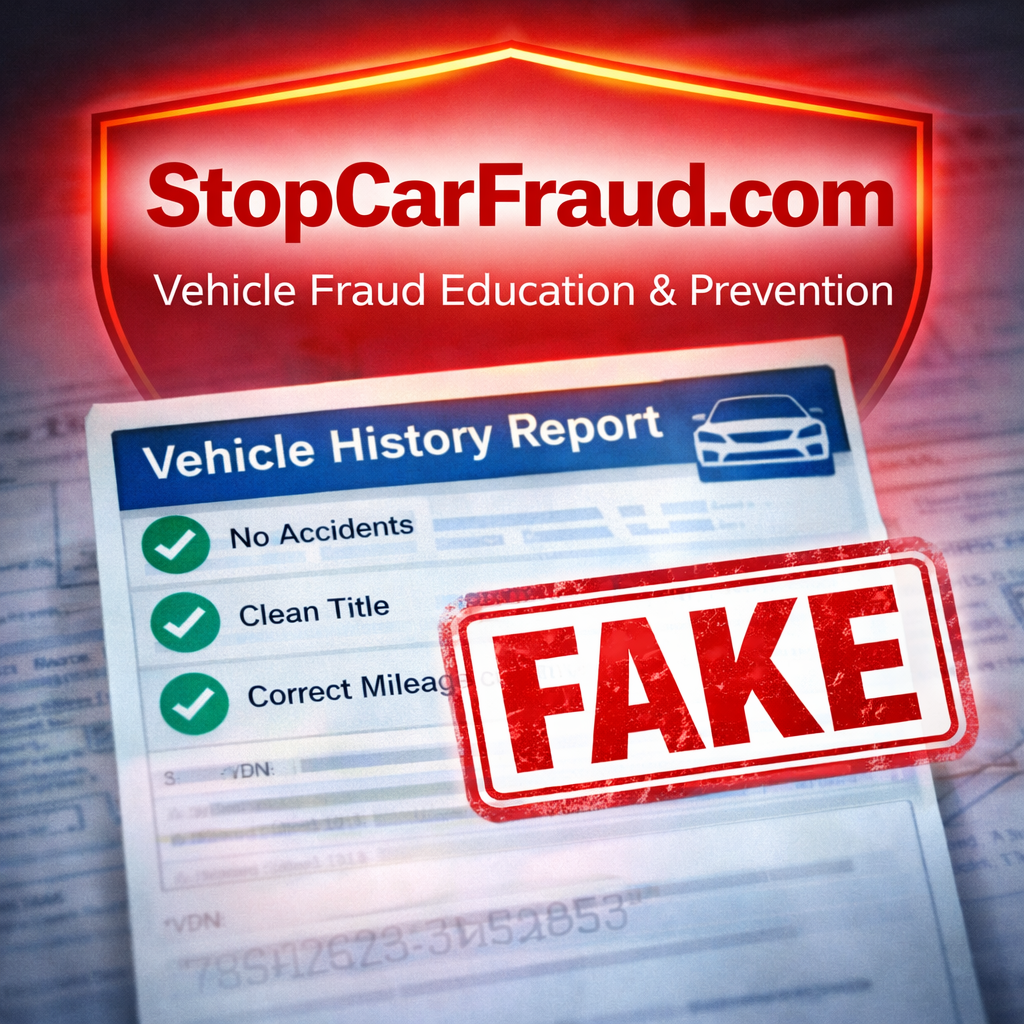
When “Clean” Isn’t Clean You found the car. The price looks right. The photos check out. Then the seller hits you with the magic words: “Clean history report.” That’s where most people drop their guard, and that’s exactly where the scam begins. Because in today’s market, a “clean” vehicle history report doesn’t always mean what you think it means. In fact, some of the most dangerous fraud happening right now revolves around fake, altered, or completely fabricated vehicle reports designed to make bad cars look flawless. Here’s how it actually works. Scammers are no longer relying on obvious lies. They’re...
Read More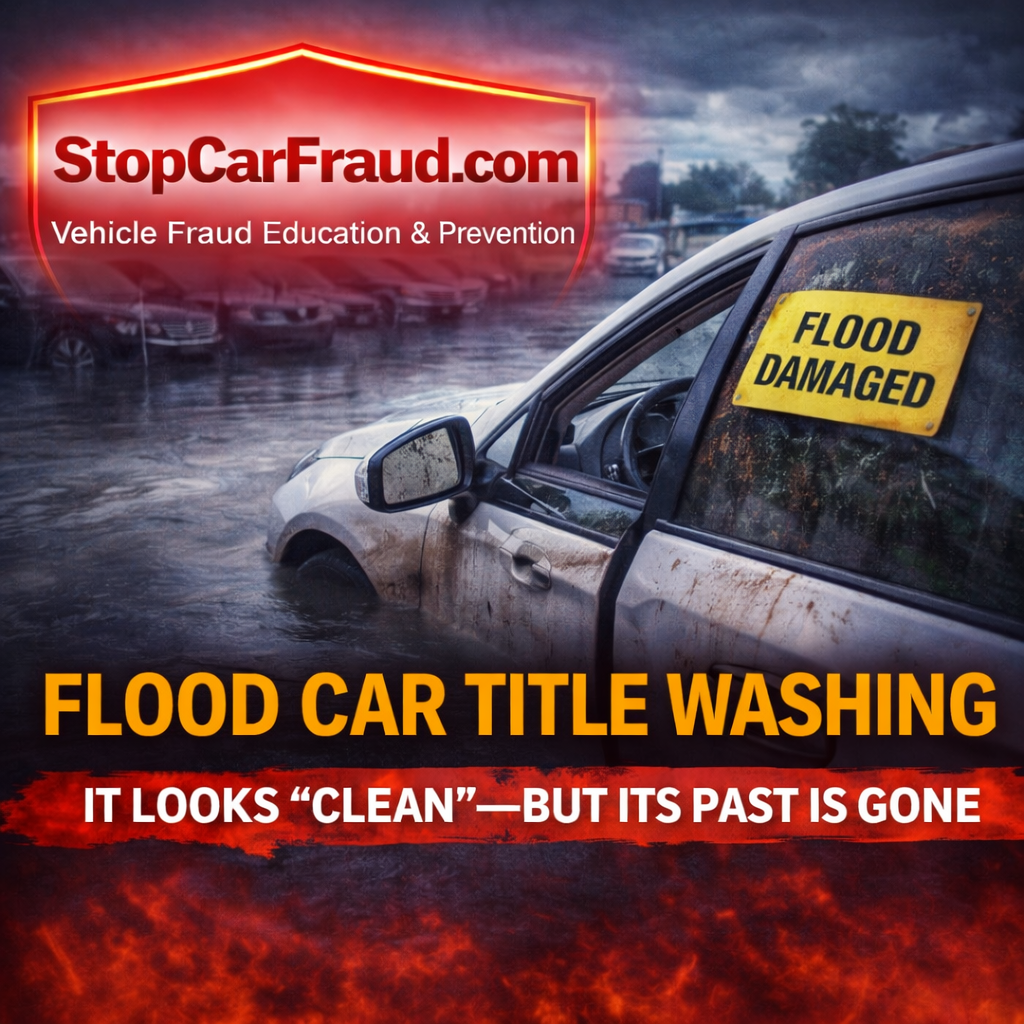
The Scam That Erases a Car’s Past—and Hands You the Risk After every major storm, whether it’s hurricanes tearing through Florida or flooding across Texas, insurance companies write off thousands of vehicles as total losses. These are flood cars, and the damage goes far beyond what you can see. Water gets into everything: electrical systems, safety components, engine parts, wiring, and sensors. On paper, these cars are supposed to be clearly marked so buyers know exactly what they’re dealing with. But that’s not what always happens. Instead, many of these vehicles get a second life through a process known as...
Read More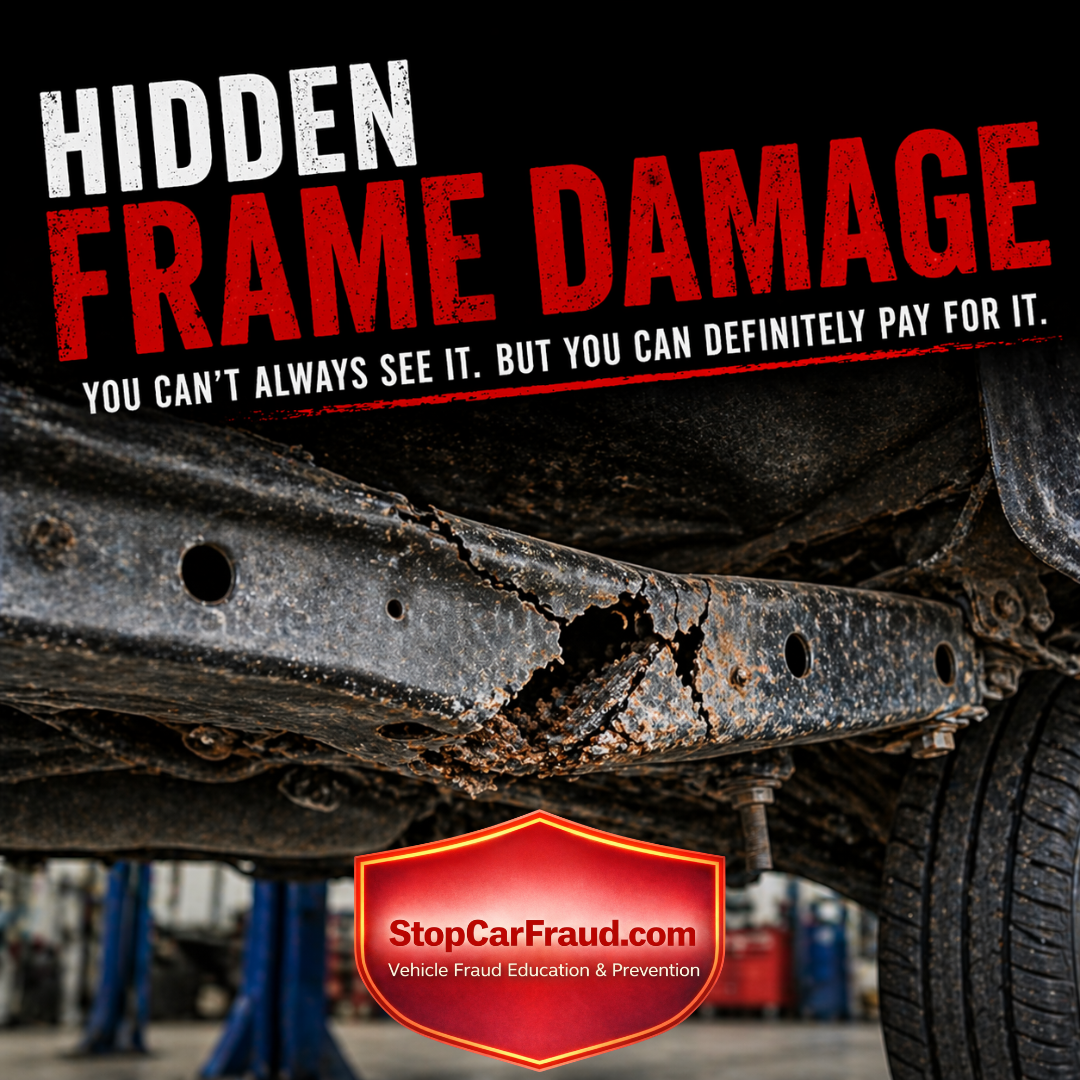
The Damage You’re Not Supposed to See There’s a reason frame damage isn’t always obvious—because the people selling the car don’t want it to be. On the surface, everything can look clean: fresh paint, aligned panels, maybe even a convincing story about “minor cosmetic repairs.” But underneath? That’s where the truth lives. Frame damage is structural, and when it’s been hidden or poorly repaired, you’re not just buying a car, you’re buying a compromised foundation that can affect safety, drivability, and long-term value. Straightened Doesn’t Mean Safe Sellers love to lean on phrases like “frame was professionally straightened” or “it...
Read More
When the Car Gets Taken Back For most buyers, the moment a deal is finished feels final. Money changes hands, keys are exchanged, and the car is now yours. There’s a sense of closure,ownership has been transferred, and the transaction is complete. But in some cases, that “final” moment is only the beginning of a much larger problem. A growing number of vehicle scams are built around a simple but highly calculated idea: sell the car, then take it back. Not through confrontation or force, but through planning, tracking, and timing. These setups often involve hidden GPS devices or unresolved...
Read More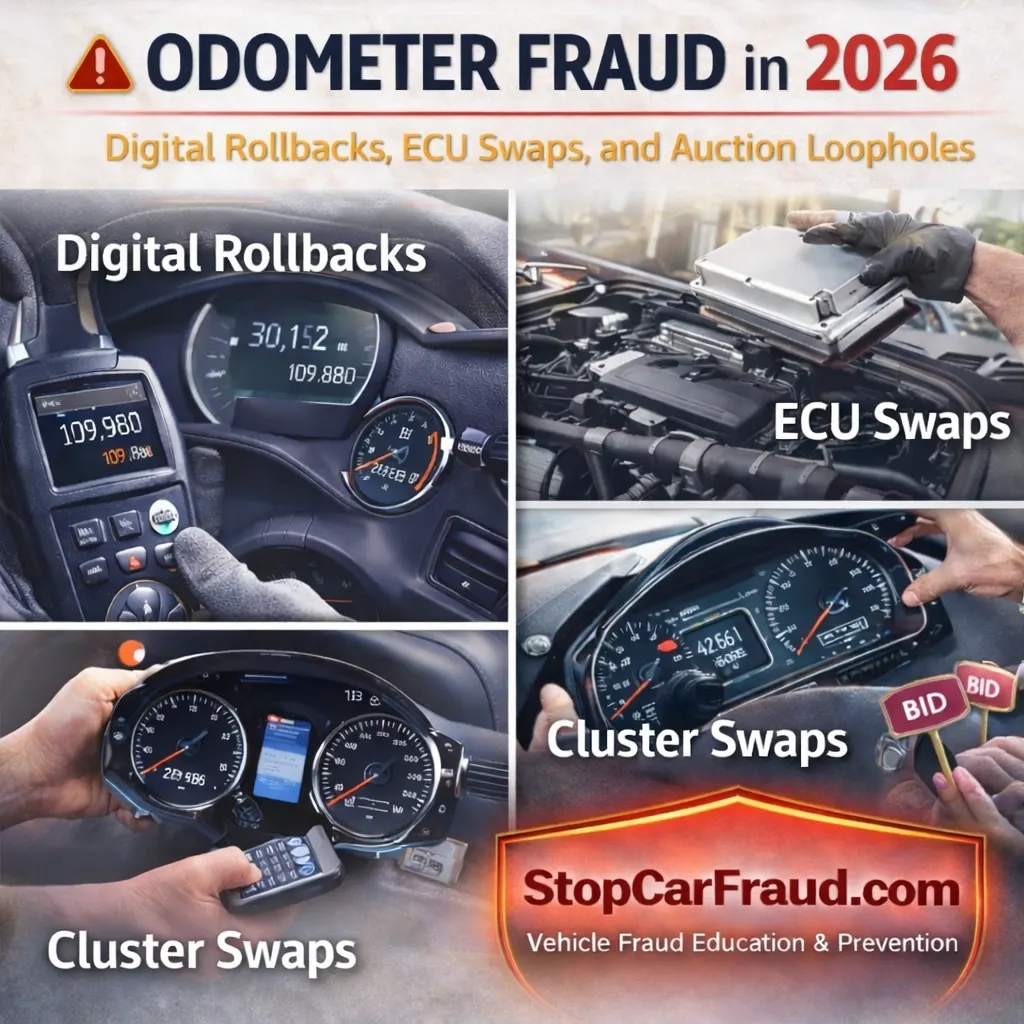
Digital Rollbacks, ECU Swaps, and Auction Loopholes Most buyers still think odometer fraud is an old-school scam involving screwdrivers and spinning numbers backward. That’s outdated thinking. and exactly why modern odometer fraud still works. In 2026, mileage manipulation is quieter, more technical, and often impossible to detect without knowing exactly what to look for. Today’s fraudsters aren’t forcing dashboards open — they’re rewriting digital identities across systems buyers rarely check. If you’re buying or selling a used vehicle, understanding how modern odometer fraud actually happens is critical. How Odometer Fraud Really Happens Today 1. Digital Cluster Swaps (Most Common Method)...
Read More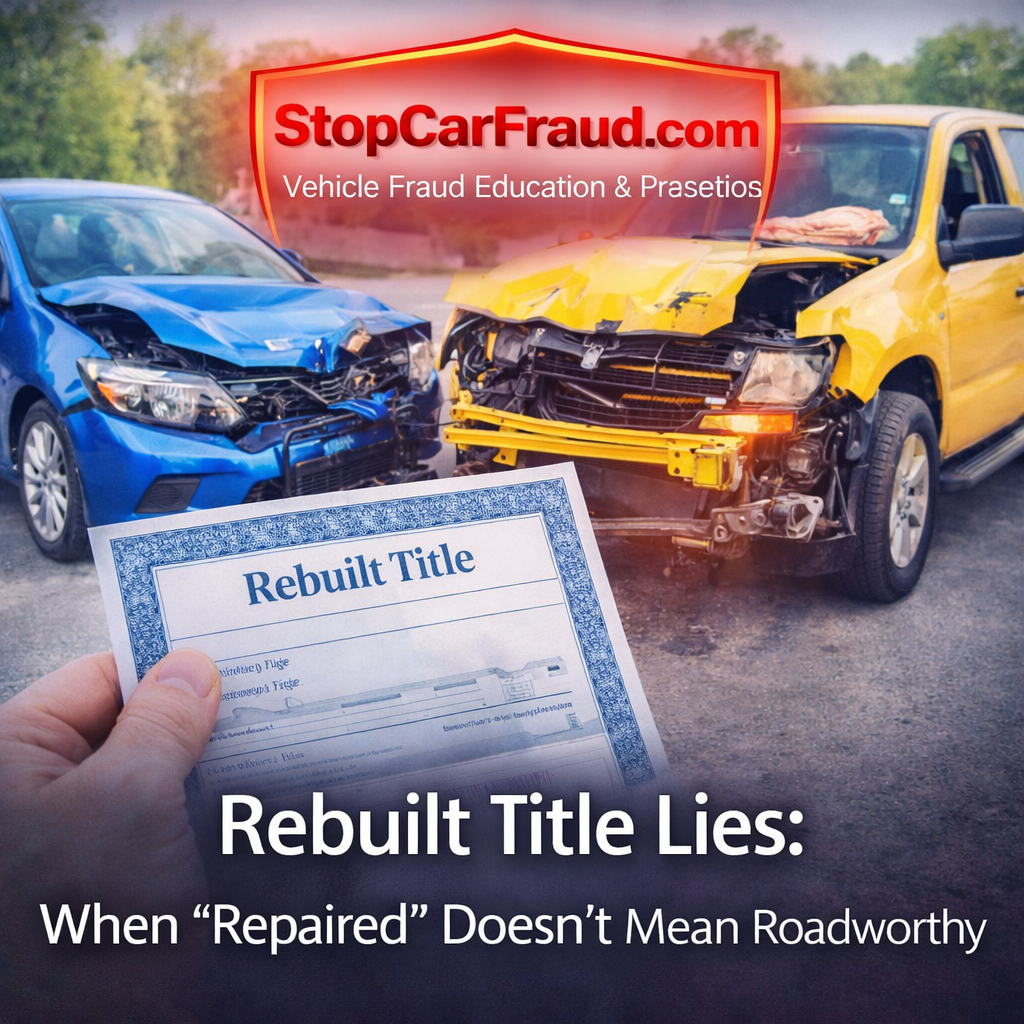
When “Repaired” Doesn’t Mean Roadworthy Here’s the uncomfortable truth most sellers won’t tell you: “Rebuilt” does not mean safe. It does not mean properly repaired. And it definitely does not mean the car is worth what you’re being asked to pay. In today’s used car market, rebuilt title vehicles are being cleaned up, relabeled, and pushed onto buyers who assume “fixed” equals “good to go.” That assumption is exactly where people get burned. What “Rebuilt” Really Means A rebuilt title simply means the vehicle was once declared a total loss and has since been repaired enough to pass a basic...
Read More