

When “Clean” Isn’t Clean
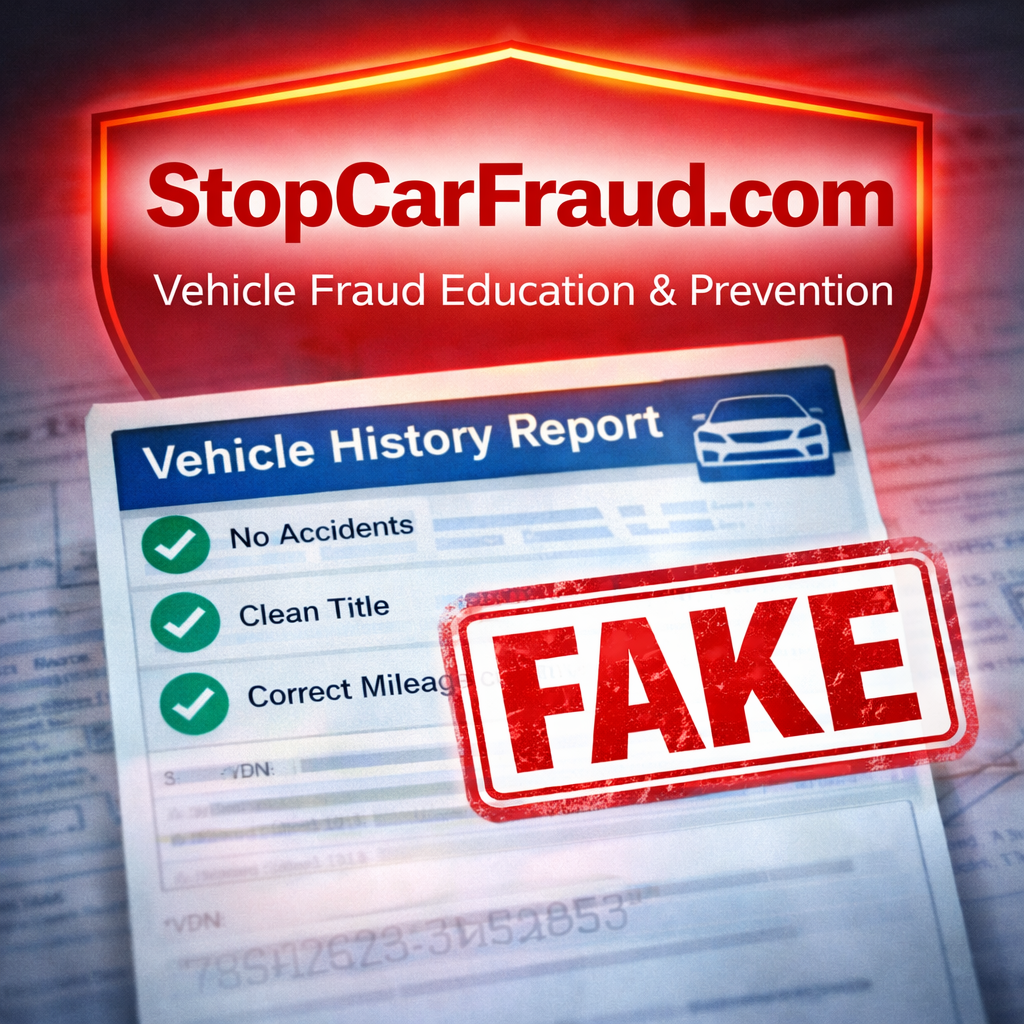
You found the car. The price looks right. The photos check out. Then the seller hits you with the magic words: “Clean history report.” That’s where most people drop their guard, and that’s exactly where the scam begins.
Because in today’s market, a “clean” vehicle history report doesn’t always mean what you think it means. In fact, some of the most dangerous fraud happening right now revolves around fake, altered, or completely fabricated vehicle reports designed to make bad cars look flawless.
Here’s how it actually works.
Scammers are no longer relying on obvious lies. They’re building convincing paperwork packages. That includes cloned reports that look like legitimate vehicle history documents, complete with logos, layout, and even realistic formatting. To the untrained eye, it’s perfect. To the scammer, it’s a weapon.
Some go a step further. They take real reports and edit them—removing accident records, wiping out salvage branding, or adjusting mileage inconsistencies. What you’re handed isn’t a report. It’s a surgically cleaned version of the truth. And here’s the part most buyers don’t realize: Even legitimate reports aren’t always complete.
Not every accident gets reported. Not every title issue shows up immediately. Not every flood-damaged car gets flagged. So when a scammer hands you a “clean” report, they’re stacking the odds in their favor, either by faking it outright or hiding behind the natural gaps in the system.
Now let’s talk about the real danger.
A vehicle with a hidden salvage history, prior structural damage, or rolled-back mileage isn’t just a bad deal—it can be unsafe, uninsurable, or even impossible to resell. You don’t find out at the lot. You find out later, when it’s your problem. And by then, the seller is gone. Burner number disconnected. Profile deleted. Identity? Never real to begin with. This is why relying on a report alone is one of the biggest mistakes buyers make.
You have to verify everything.
Run your own report. Never trust one handed to you. Compare multiple sources. Look for inconsistencies in dates, mileage, and ownership records. Check the VIN across different platforms. Inspect the vehicle in person, or have it professionally inspected. If something feels off, it probably is. Also pay attention to behavior. If a seller is pushing their report hard, refusing independent verification, or rushing the deal, that’s not confidence, that’s control. And control is exactly what scammers need to close the deal before you start asking real questions.
The bottom line? A “clean” history report is not proof of a clean car. It’s just one piece of a much bigger puzzle—and sometimes, it’s a fake piece.
At StopCarFraud.com, we break down scams like this because too many buyers are still being misled by paperwork that looks official but tells a completely different story underneath. If you’re unsure about a vehicle, a report, or a seller’s claims, get informed before you commit.
Because once you buy into a fake history, you’re not just buying a car—
You’re buying the scam that came with it.