

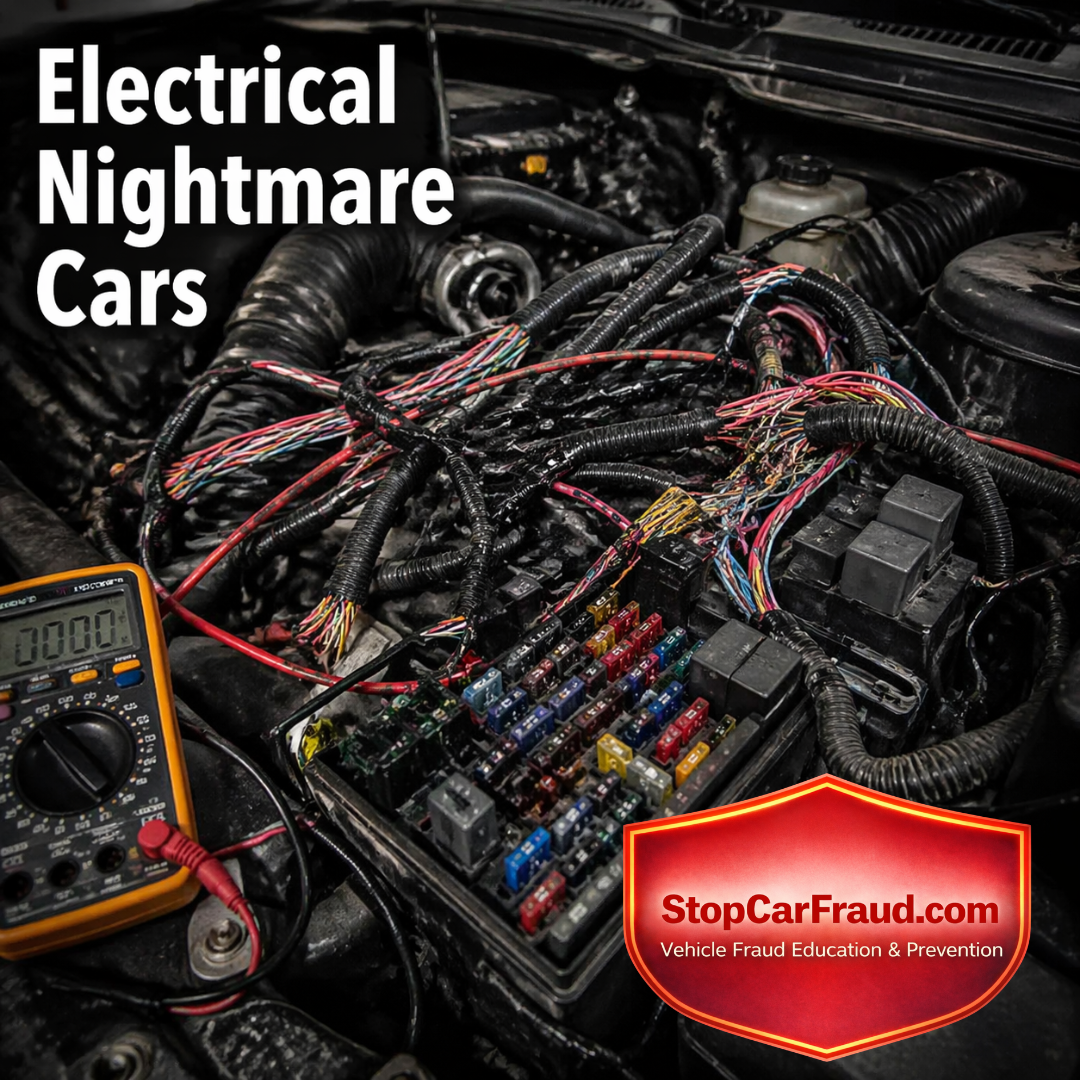
When Everything “Works”... Until It Doesn’t
At first glance, the car seems fine. The lights turn on, the dash looks normal, maybe even the test drive goes smoothly. But electrical nightmare cars don’t reveal themselves right away—they wait. These are vehicles where wiring has been patched, altered, or outright butchered, often after accidents, floods, or sloppy repairs. What you’re really buying isn’t a car, it’s a rolling question mark.
The Problem You Can’t See
Unlike engine issues or body damage, electrical problems are buried deep inside the vehicle. Behind panels. Under carpets. Inside harnesses you’ll never see unless the car is torn apart. Sellers know this. That’s why these cars get cleaned up just enough to pass a casual inspection. Everything looks intact, but underneath? Spliced wires, corrosion, mismatched components, and shortcuts that were never meant to last.
The Quick Fix Culture
Electrical nightmare cars are usually the result of “good enough” repairs. Instead of replacing damaged wiring properly, someone twists wires together, tapes them up, and sends it. Maybe a module gets swapped without programming. Maybe a fuse keeps blowing, so they bypass it entirely. These fixes aren’t solutions, they’re temporary bandages that slowly unravel once the car is back in regular use.
The Chaos Starts Small
The issues don’t usually hit all at once. It starts with something minor, a window that won’t roll down, a radio that cuts out, a warning light that flickers. Annoying, but manageable. Then it spreads. Sensors stop communicating. Systems glitch. The car begins acting unpredictably, and suddenly you’re chasing problems that don’t seem connected, but absolutely are.
Why Diagnosis Becomes a Nightmare
Here’s where it gets brutal: electrical issues are some of the hardest (and most expensive) problems to diagnose. Mechanics can spend hours, sometimes days, trying to trace faults through damaged wiring. And if the system has been altered enough, even professionals hit dead ends. You’re not just paying to fix the problem, you’re paying to find it.
The Cover-Up Tactics
Just like other scams, this one relies on distraction and concealment. Interiors get detailed. Fault codes get cleared. Batteries get disconnected to reset systems temporarily. Sellers present the car at its absolute best moment, right before things start failing again. If you’re not careful, you’re stepping into a situation that was designed to hold together just long enough to make the sale.
Why This One Hits Hard Financially
Electrical nightmare cars don’t come with a single repair bill, they come with a series of them. One issue leads to another, and before long, you’ve spent thousands chasing stability that never fully returns. And unlike cosmetic problems, you can’t ignore electrical failures. They affect drivability, safety systems, and the basic functionality of the vehicle.
How to Protect Yourself
If a car has a history of flooding, major repairs, or unexplained electrical quirks, hit pause! Ask questions. Get a thorough inspection, not just a quick scan. Look for inconsistencies, aftermarket wiring, or anything that feels “off.” And if the seller seems eager to move quickly or dismiss concerns, that’s your cue to slow down or walk away.
The Reality Check
Electrical nightmare cars aren’t bad luck, they’re usually the result of someone cutting corners and passing the problem along. By the time you realize what you bought, you’re already deep into a situation that’s expensive, frustrating, and hard to fix. Don’t rely on appearances. Verify everything. And if something doesn’t add up, trust that instinct, because StopCarFraud.com exists to help you spot these problems before they become yours.