

Digital Rollbacks, ECU Swaps, and Auction Loopholes
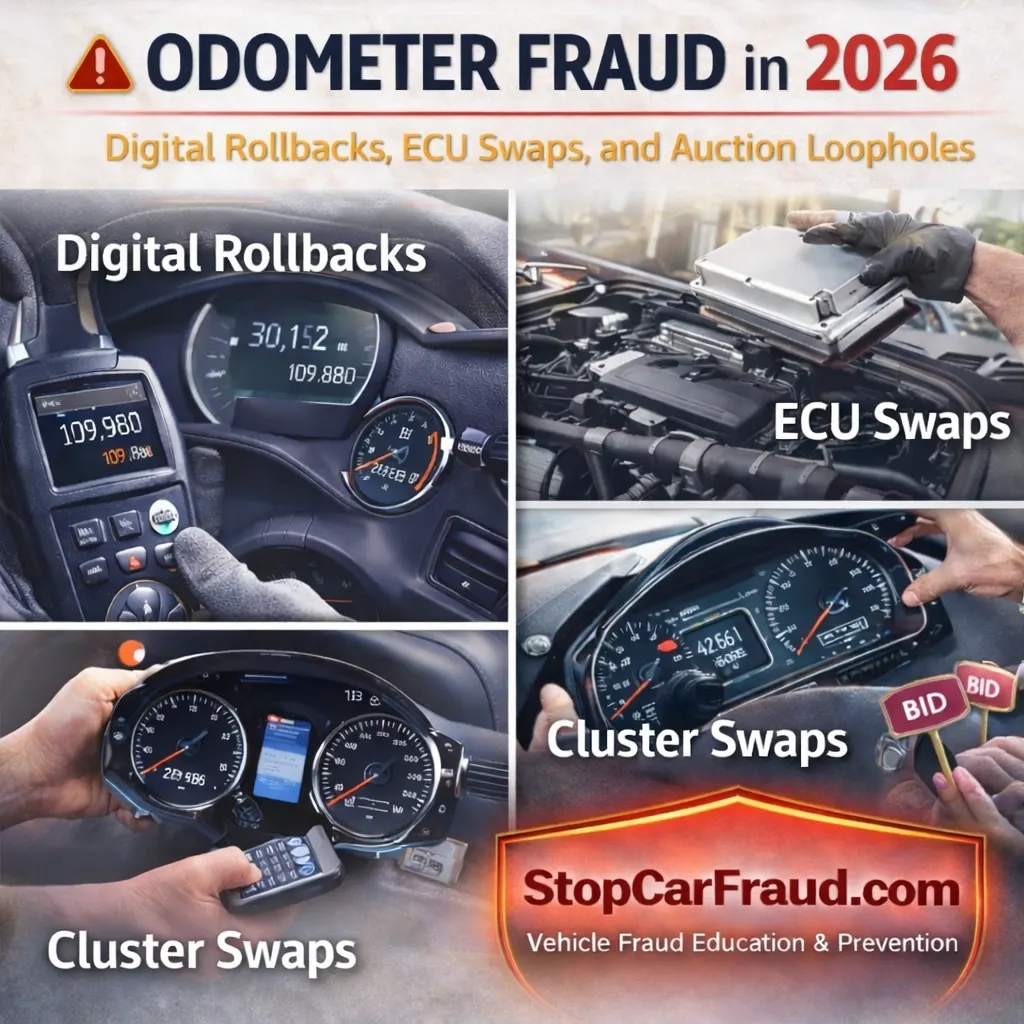
Most buyers still think odometer fraud is an old-school scam involving screwdrivers and spinning numbers backward. That’s outdated thinking. and exactly why modern odometer fraud still works. In 2026, mileage manipulation is quieter, more technical, and often impossible to detect without knowing exactly what to look for. Today’s fraudsters aren’t forcing dashboards open — they’re rewriting digital identities across systems buyers rarely check.
If you’re buying or selling a used vehicle, understanding how modern odometer fraud actually happens is critical.
How Odometer Fraud Really Happens Today
1. Digital Cluster Swaps (Most Common Method)
Modern vehicles store mileage in multiple modules, but the instrument cluster is still the easiest target. Criminals install lower-mileage clusters sourced from wrecked or salvage vehicles, then synchronize visible data enough to avoid suspicion.
Clues often remain:
- Faint wear mismatches between interior condition and displayed mileage
- Slight lighting inconsistencies in replacement clusters
- Loose trim around dashboard panels
2. ECU Reprogramming + Digital Rollbacks
Advanced fraud rings now use software tools to reset or alter mileage directly through onboard diagnostics. These digital rollbacks leave fewer visible signs and often pass casual inspection.
Common tactics include:
- ECU rewriting tools purchased through gray-market sources
- Partial resets across modules to avoid detection
- Rolling back mileage just enough to increase value without raising suspicion
3. Multi-Module Manipulation
Newer vehicles store mileage in multiple systems:
- ECU
- Transmission module
- ABS module
- Telematics units
Fraudsters don’t always synchronize all modules, and that’s where detection happens.
Auction and Transport Loopholes Criminals Exploit
Mileage manipulation frequently happens between ownership events:
Pre-Auction Entry Windows
Vehicles entering wholesale auctions often pass quickly through intake processes where deep verification isn’t performed.
Post-Transport Timing Gaps
Mileage may be altered during transport cycles between auctions, wholesalers, and retail sellers.
Cross-State Transfers
Odometer reporting rules vary by jurisdiction, creating opportunities for inconsistent documentation.
These timing gaps are prime opportunities for manipulation before vehicles reach retail markets.
Data Mismatch Detection: Where Fraud Gets Exposed
Modern odometer fraud usually reveals itself through inconsistencies:
History Reports vs Service Records
Maintenance invoices often contain mileage entries fraudsters overlook.
Telematics vs Odometer Data
Connected vehicle systems frequently store mileage logs independently.
Inspection Stickers + Emissions Records
Older documentation often conflicts with altered mileage readings.
Ownership Timeline Gaps
Sudden mileage drops between transfers are major warning signs.
The key is comparing multiple data sources, not relying on one report.
Real Financial Impact: Why This Matters
Mileage fraud dramatically affects vehicle value:
- A 60,000-mile rollback can inflate price by thousands
- Fraudulent mileage reduces resale trust later
- Financing and insurance valuations become inaccurate
- Buyers face major losses during resale or trade-in
Most victims only discover the truth when trying to sell the vehicle.
Buyer + Seller Checklist: Spot Odometer Fraud Fast
Before buying or selling:
✔ Compare mileage across all records
✔ Inspect interior wear vs displayed mileage
✔ Review service and inspection history carefully
✔ Question inconsistent ownership timelines
✔ Use multi-source verification tools before committing
Protect Yourself Before It Costs You
Odometer fraud isn’t disappearing, it’s evolving. The smartest move is verifying every vehicle using layered checks before making decisions.
Use StopCarFraud.com for education, verification workflows, and fraud detection guidance designed to catch what basic reports miss. Because once manipulated mileage becomes your problem, proving fraud, and recovering losses is extremely difficult.