

How Buyers and Sellers Lose Thousands in Minutes
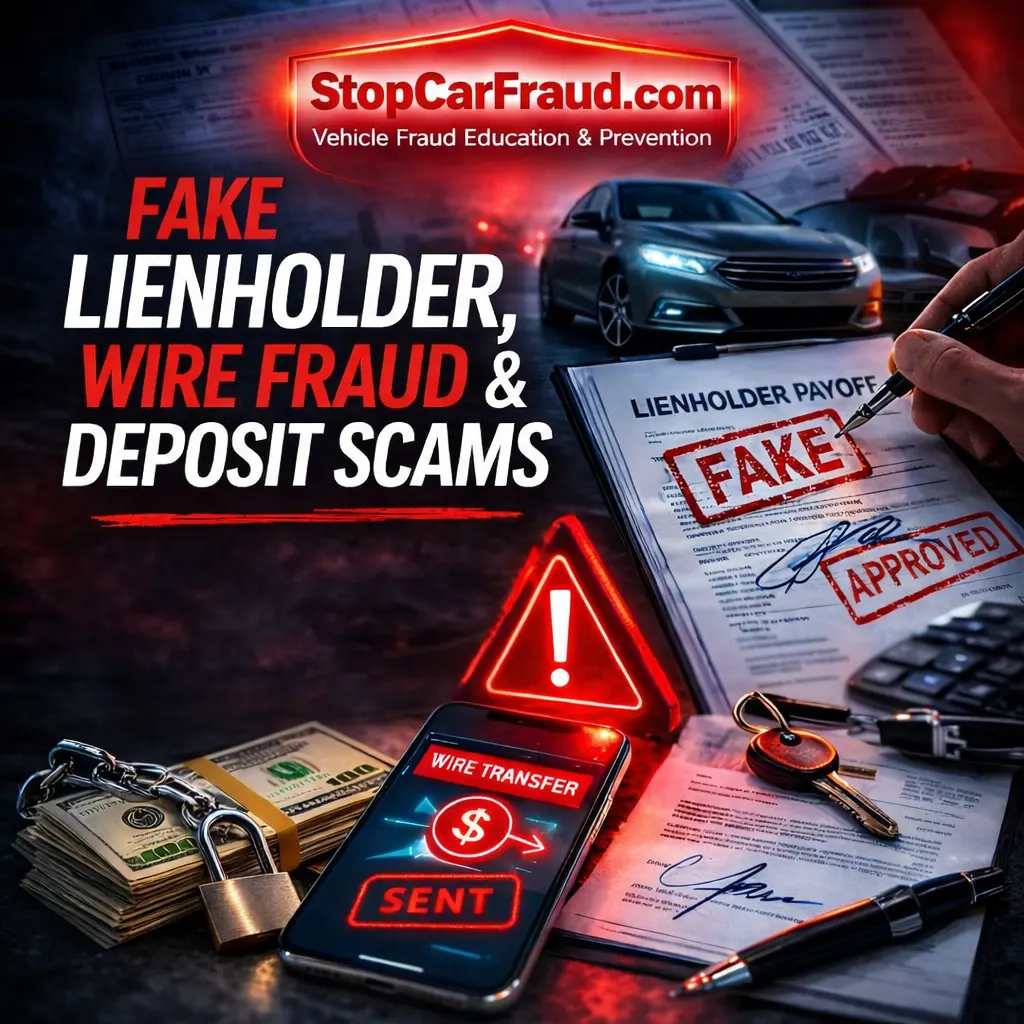
Car fraud isn’t always loud, messy, or obvious. Some of the worst scams are clean, polite, and professional-looking, and by the time victims realize what happened, the money is already gone. Fake lienholder, wire fraud, and deposit scams are exploding across private-party car sales, and they’re hitting both buyers and sellers hard. If you don’t understand exactly how these scams work, you’re vulnerable.
How the Scam Actually Works (Step-by-Step)
Most fake lienholder scams follow a predictable script. First, the fraudster lists a vehicle slightly below market value to trigger urgency and emotional decision-making. The listing often includes clean photos, believable details, and a convincing story, relocation, divorce, military deployment, or estate sale.
Next, they push communication off-platform. They want text, email, or messaging apps only, never direct calls or in-person meetings. Once trust builds, they introduce a fake lienholder story, claiming the vehicle still has a loan balance that must be paid off before transfer. Then comes the polished payoff statement and wiring instructions.
That’s the trap. The buyer wires funds believing they’re paying the lender directly. Within minutes, the money is gone — often routed overseas through layered accounts.
Sellers get hit too. Fraudsters pose as buyers sending fake cashier’s checks or “overpayments,” then pressure sellers to refund the difference quickly. Others send fake Zelle or Venmo confirmation screenshots to trick sellers into releasing the vehicle before funds exist.
The Psychology Behind Why These Scams Work
These scams aren’t random — they’re engineered.
Fraudsters rely on urgency (“multiple buyers waiting”), authority (“bank payoff required”), and scarcity pricing to push fast decisions. They also manufacture trust using fake payoff letters, spoofed lender emails, and official-looking loan statements.
Victims often aren’t careless, they’re rushed!
How to Spot a Fake Lienholder Setup Fast
Most fake lienholder scams fall apart under basic scrutiny. Watch for:
- Payoff statements missing lender account verification details.
- Wiring instructions that don’t match the lender’s official routing info.
- Emails sent from lookalike domains instead of real lender addresses.
- Pressure to pay immediately without verification.
- Refusal to allow direct confirmation with the lender.
Real lenders always allow independent verification and never rush payoff wiring.
Real-World Victim Scenarios (What Actually Happens)
Buyers have wired $15,000–$25,000 believing they were paying a legitimate lender — only to discover the lien never existed. Sellers have refunded fake overpayments and lost both the vehicle and cash.
Others paid fake transport deposits tied to fake lien payoff coordination scams.
In nearly every case, victims only realized after the money disappeared.
How to Bulletproof Yourself Before Any Transaction
If You’re Buying:
- Call the lender directly using publicly listed contact info.
- Never wire funds without confirming payoff instructions yourself.
- Complete transactions at the lender’s branch whenever possible.
If You’re Selling:
- Accept only verified funds.
- Never refund overpayments until funds fully clear.
- Close deals at a bank or DMV whenever possible.
The Reality Most Victims Learn Too Late
Wire fraud is nearly impossible to reverse. Once the money moves, recovery rates are extremely low. That’s why prevention matters more than reaction.
The smartest move is simple: verify everything before money moves. Running a transaction through a proper fraud-screening workflow and use StopCarFraud.com and our verification approach, can stop a scam before it starts.
Because in car fraud, the moment you feel rushed is usually the moment you should walk away.